
What You Need to Know About Lease-to-Own Cars

Navigating the world of car ownership can be challenging, especially when traditional financing options are out of reach. Lease-to-own cars present an intriguing alternative for individuals looking to secure a vehicle without a stellar credit history. This option allows drivers to lease a car with the possibility of owning it after completing a series of installment payments.

Understanding the intricacies of lease-to-own agreements is crucial for making an informed decision. These contracts often come with unique terms, payment structures, and potential pitfalls that differ significantly from conventional car loans or leases. By grasping how these arrangements work, you can determine if this route aligns with your financial goals and needs.
This article will guide you through:
- The mechanics of lease-to-own cars
- Who stands to benefit from these agreements
- Financial implications
- Pros and cons
- Key considerations before committing
- Shopping tips
- Comparison with traditional leasing
- Alternative financing options
For those facing financial hurdles, knowing all available options is essential. It’s advisable to seek professional guidance in such situations. For more insights on managing debt and achieving financial freedom, consider visiting the Law Office of Richard Kistnen, which specializes in various aspects of bankruptcy law and financial management.
Understanding Lease-to-Own Cars
The lease-to-own concept offers an alternative path to car ownership, especially beneficial for those with poor credit histories. This method allows you to lease a vehicle with the option to buy it at the end of the lease term. The process is straightforward but involves several key steps.
How Lease-to-Own Works

In a lease-to-own agreement, you:
- Lease the Car: You begin by leasing a used vehicle, making regular payments—often weekly or bi-weekly.
- Buyout Option: At the end of the lease period, you have the option to purchase the car outright.
Steps to Acquire a Vehicle Through Lease-to-Own
- Find a Dealership: Look for dealerships that offer lease-to-own programs. These are typically smaller, independent dealers rather than large franchised ones.
- Qualify: Provide necessary documentation such as proof of identity, residency or citizenship, and regular income.
- Initial Payment: Pay any required down payment or signing fees.
- Sign Agreement: Carefully review and sign the lease agreement, ensuring you understand terms regarding payment schedules and potential penalties for early termination.
- Make Payments: Make consistent weekly or bi-weekly payments which contribute toward eventual ownership.
- Exercise Buyout Option: At the end of the lease term, decide whether to purchase the car by paying any remaining balance.
Understanding these steps ensures you are well-prepared for what lies ahead in the lease-to-own car ownership process.
Who Can Benefit from Lease-to-Own Cars?

Advantages for Individuals with Poor Credit History
Lease-to-own cars present a viable car financing option for those struggling with bad credit. Traditional auto loans often require a good credit score, making it difficult for individuals with poor credit histories to secure financing. Lease-to-own agreements usually don’t involve rigorous credit checks, providing an accessible route to vehicle ownership.
Key Benefits:
- No Credit Check Needed: Most lease-to-own contracts bypass the need for a good credit score.
- Accessible Financing: Offers an alternative where traditional car loans are not available.
- Gradual Ownership: Allows individuals to work towards owning a vehicle over time.
Alternative to Accumulating Student Loan Debt
For students, lease-to-own options can offer financial relief compared to taking on additional student loan debt. The flexibility of smaller, more manageable payments—typically structured on a weekly or bi-weekly basis—can be less burdensome than large lump-sum payments associated with student loans.
How It Helps Students:
- Manageable Payments: Weekly or bi-weekly payment plans fit better into tight student budgets.
- Financial Planning: Avoids the long-term financial strain associated with student loans.
- Immediate Use of Vehicle: Provides immediate access to transportation, essential for commuting to classes or part-time jobs.
By leveraging lease-to-own car agreements, both individuals with bad credit and students can find practical solutions to their transportation needs without the daunting barriers posed by traditional financing methods.
Financial Aspects of Lease-to-Own Cars

Breakdown of Weekly/Bi-Weekly Payments and Down Payment Requirements
Lease-to-own car agreements often feature weekly or bi-weekly payments rather than the traditional monthly installments seen in conventional car loans. These frequent payment intervals can make budgeting easier for some, as smaller amounts are due more regularly. However, it’s crucial to understand how these payments add up over time.
Key points to consider:
- Payment Frequency: Typically, lease-to-own agreements require weekly or bi-weekly payments, which means you’ll need to keep a close eye on your cash flow.
- Installment Payments: The exact amount will vary based on the vehicle’s value, the length of the lease term, and any additional fees included in the contract.
- Down Payment Requirements: Many lease-to-own contracts necessitate an initial down payment. This upfront cost can range from a few hundred to several thousand dollars depending on the vehicle and dealership terms.
Understanding Total Costs Involved
While it may seem manageable to handle smaller, frequent payments, it’s essential to grasp the full scope of costs involved in a lease-to-own contract. Beyond the regular installment payments, there are other financial aspects to consider:
- Down Payments and Signing Fees:
- Down Payments: This initial payment reduces the overall amount financed through the lease agreement.
- Signing Fees: Additional costs such as administrative fees or processing charges may be required at the start of the lease.
- Overall Cost Analysis:
- Although individual payments might appear lower compared to conventional auto loans, the total cost over time can be significantly higher due to accumulated interest and fees.
- It’s vital to calculate the entire expenditure, including all payments made throughout the lease period plus any final buyout amount if you intend to own the vehicle at the end.
- Potential Hidden Fees:
- Some contracts may include extra charges for mileage overages or wear-and-tear beyond ‘normal’ usage.
- Early termination fees can apply if you decide to end your lease agreement prematurely.
Understanding these elements helps in making an informed decision about whether a lease-to-own car fits within your financial plan. Awareness of all associated costs ensures that you’re not caught off guard by unexpected expenses later.
Pros and Cons of Lease-to-Own Cars

Understanding the benefits and drawbacks of lease-to-own cars is crucial for making an informed decision. This section explores the key advantages and potential pitfalls associated with lease-to-own agreements.
Advantages of Lease-to-Own Cars
- Likely Approval without Good Credit Score: One of the most appealing aspects of lease-to-own cars is the high likelihood of approval, even for those with poor or no credit history. Traditional auto loans can be daunting for individuals with less-than-perfect credit, often leading to rejections or prohibitively high-interest rates. Lease-to-own arrangements, on the other hand, typically do not require a credit check, making it accessible to a broader range of consumers.
- Lower Monthly Payments Compared to Financing: Lease-to-own agreements usually feature lower monthly payments compared to traditional car financing. This can be particularly beneficial for individuals on a tight budget. Payments are often structured on a weekly or bi-weekly basis, which can further ease financial planning and cash flow management.
- Ownership After a Shorter Commitment Period: Unlike traditional leases that may span three to five years, lease-to-own agreements often have shorter terms, ranging from one to two years. Upon completion of the payment schedule, consumers gain full ownership of the vehicle. This can be a significant advantage for those seeking long-term use without ongoing monthly payments beyond the initial term.
Disadvantages of Lease-to-Own Cars
- Lack of Warranty: A notable downside to many lease-to-own vehicles is the lack of warranty coverage. Unlike new cars purchased through traditional financing or leasing options that come with manufacturer warranties, lease-to-own vehicles are usually sold “as-is.” This means any repairs or maintenance costs fall solely on the buyer, potentially leading to unexpected expenses down the line.
- Potential Depreciation Concerns: Vehicle depreciation is another critical consideration in lease-to-own contracts. Cars typically lose value over time, and by the end of a lease-to-own agreement, the vehicle’s worth may be significantly less than the total amount paid through installments. This depreciation can result in paying more than what the car is ultimately worth, reducing its financial viability as an asset.
Understanding these pros and cons helps in evaluating whether a lease-to-own vehicle aligns with your financial situation and long-term goals. Balancing these factors against your current needs ensures you make a well-informed decision about entering into a lease-to-own agreement.
Important Considerations Before Committing to a Lease-to-Own Agreement

Understanding Contract Terms
When considering a lease-to-own vehicle, understanding the contract terms is essential. These agreements can contain complex clauses that may impact your financial commitment and the overall cost of the vehicle. Key elements to scrutinize include:
- Payment Structure: Familiarize yourself with how payments are allocated toward the purchase price. Are you making weekly or bi-weekly payments? Is there an initial down payment, and how much of that goes toward the final purchase price?
- Interest Rates and Fees: Determine whether interest rates are explicitly stated and if there are any hidden fees such as administrative charges or late payment penalties.
Early Termination Consequences
One critical aspect often overlooked in lease-to-own agreements is the consequence of early termination. Circumstances may arise where you need to exit the agreement prematurely. Here’s what you need to know:
- Forfeiture of Down Payment: If you terminate the lease early, you might lose your initial down payment along with any accumulated payments.
- Additional Penalties: Some contracts impose hefty penalties for early termination, which could significantly increase your financial burden.
- Credit Impact: While lease-to-own agreements don’t typically improve your credit score, failing to meet your obligations might still negatively impact your credit if reported by the dealer.
Payment Allocation Towards Purchase
Understanding how each payment contributes towards owning the vehicle is vital for assessing the true cost:
- Principal vs. Interest: Clarify whether your payments are primarily covering interest or reducing the principal amount owed on the vehicle.
- Ownership Milestones: Identify at what point in the payment schedule you will gain full ownership of the car.
Additional Considerations
Before signing a lease-to-own agreement, consider these additional tips:
- Comparison Shopping: Look at multiple offers to ensure you’re getting fair terms.
- Legal Advice: Consulting with a legal advisor can provide clarity on any ambiguous terms within the contract.
- Total Cost Evaluation: Calculate the total cost over time, including any down payments, recurring fees, and potential penalties for early termination.
By thoroughly understanding these contract terms and potential pitfalls, you can make an informed decision about whether a lease-to-own agreement aligns with your financial goals and circumstances.
Shopping Tips for a Successful Lease-to-Own Experience

Finding the right lease-to-own car requires diligence and strategy. Here are some essential tips to help you secure fair pricing and reasonable terms:
1. Comparison Shopping
Evaluating multiple lease-to-own options is crucial. Start by visiting various dealerships and online platforms that offer lease-to-own vehicles. Compare:
- Payment Plans: Look at weekly/bi-weekly payment schedules to find one that fits your budget.
- Total Costs: Calculate the overall cost, including down payments, signing fees, and any other associated charges.
- Vehicle Condition: Examine the mileage, age, and condition of the vehicle to ensure you’re getting value for your money.
2. Research Dealerships
Not all dealerships are created equal. Opt for reputable ones with transparent practices. Check reviews and ratings online to gauge customer satisfaction. A dealership with a good track record is more likely to offer fair terms and reliable vehicles.
3. Understand Contract Terms
Before committing, read the contract thoroughly. Key elements to look out for include:
- Early Termination Fees: Understand the financial implications if you need to end the contract early.
- Payment Allocation: Ensure you know how each payment contributes towards ownership.
- Buyout Options: Clarify the process and cost of purchasing the vehicle at the end of the lease period.
4. Negotiate Terms
Don’t hesitate to negotiate. Many aspects of a lease-to-own agreement can be flexible, including:
- Down Payment: Try to reduce the initial amount required.
- Interest Rates: Aim for lower rates to minimize total costs.
- Payment Frequency: Adjust payment schedules to better align with your cash flow.
5. Seek Professional Advice
Consider consulting with a financial advisor or legal expert familiar with lease-to-own agreements. They can provide insights into potential pitfalls and suggest ways to protect your interests.
6. Use Online Tools
Several websites offer tools to calculate and compare lease-to-own deals. Utilize these resources to get a clearer picture of what you’re committing to financially.
By following these tips, you can navigate lease-to-own car shopping more effectively, ensuring you secure a deal that meets your needs without hidden surprises or excessive costs.
Lease-to-Own vs Traditional Leasing: Which is Right for You?

When deciding between lease-to-own and traditional leasing options, it’s crucial to understand the distinctions and how each fits your financial situation and needs.
Key Differences
1. Dealership Types:
- Lease-to-Own: Typically available at independent dealerships specializing in used cars. These dealerships cater to individuals with poor credit or limited financing options.
- Traditional Leasing: Available at franchised dealerships that offer new vehicles. These dealerships often work with car manufacturers and provide more conventional financing options.
2. Vehicle Selection:
- Lease-to-Own: Generally focuses on used cars, which might have higher mileage and potential wear-and-tear issues.
- Traditional Leasing: Primarily involves new vehicles with fewer miles, often under warranty, and in pristine condition.
3. Credit Requirements:
- Lease-to-Own: Easier approval process, usually no credit check required. Ideal for those with a poor credit history.
- Traditional Leasing: Requires a good to excellent credit score. Lenders perform thorough credit checks, making it challenging for individuals with subpar credit to qualify.
4. Payment Structure:
- Lease-to-Own: Payments are typically made weekly or bi-weekly, providing a more frequent but manageable payment schedule.
- Traditional Leasing: Payments are usually monthly, which might be easier for budgeting if you have a stable income.
Pros and Cons
Lease-to-Own:
- Pros:Likely approval without good credit score
- Lower immediate payments compared to financing
- Ownership after a shorter lease period (generally 1-2 years)
- Cons:Higher overall cost due to frequent payments and potential fees
- No warranty coverage leading to out-of-pocket repair expenses
Traditional Leasing:
- Pros:Access to new vehicles under warranty
- Potential rebates and the option to purchase at the end of the lease
- Lower monthly payments compared to an auto loan
- Cons:No equity built into the vehicle for future purchase
- Mileage limits with penalties for excess use
- Requires a good credit score for approval
Choosing between lease-to-own and traditional leasing depends largely on your financial situation, vehicle needs, and long-term goals. Understanding these key differences helps ensure a decision that aligns with your lifestyle and budget constraints.
Alternatives to Consider When It Comes to Car Financing

Exploring different avenues of car financing can help you make an informed decision. Two alternatives to lease-to-own cars that you might consider are second-chance auto loans and leveraging a co-signer with good credit.
Second-Chance Auto Loans
Second-chance auto loans are designed for individuals with poor or no credit history. These loans often come with higher interest rates due to the increased risk for lenders. However, they offer a path to vehicle ownership when traditional financing options are not available.
Key Features of Second-Chance Auto Loans
- Higher Interest Rates: Expect interest rates to be significantly higher compared to conventional loans. This reflects the lender’s risk.
- Approval Chances: Easier approval process, making it accessible for those who have faced credit challenges.
- Building Credit: Timely payments can improve your credit score if the lender reports to credit bureaus.
Benefits of a Co-Signer
Having a co-signer can open up more favorable financing terms. A co-signer with good credit can significantly impact your loan’s interest rate and approval chances.
Advantages of Having a Co-Signer
- Lower Interest Rates: With a co-signer, you could secure a loan at a much lower interest rate.
- Improved Approval Odds: Lenders view co-signers as added security, increasing your likelihood of approval.
- Shared Responsibility: The co-signer shares financial responsibility, which may help you manage the loan more effectively.
Considering these options provides flexibility and potentially better financial terms than lease-to-own agreements. Each alternative has its own set of benefits and considerations, making it essential to align them with your financial situation and long-term goals.
The Bottom Line: Making Informed Decisions About Car Financing Options
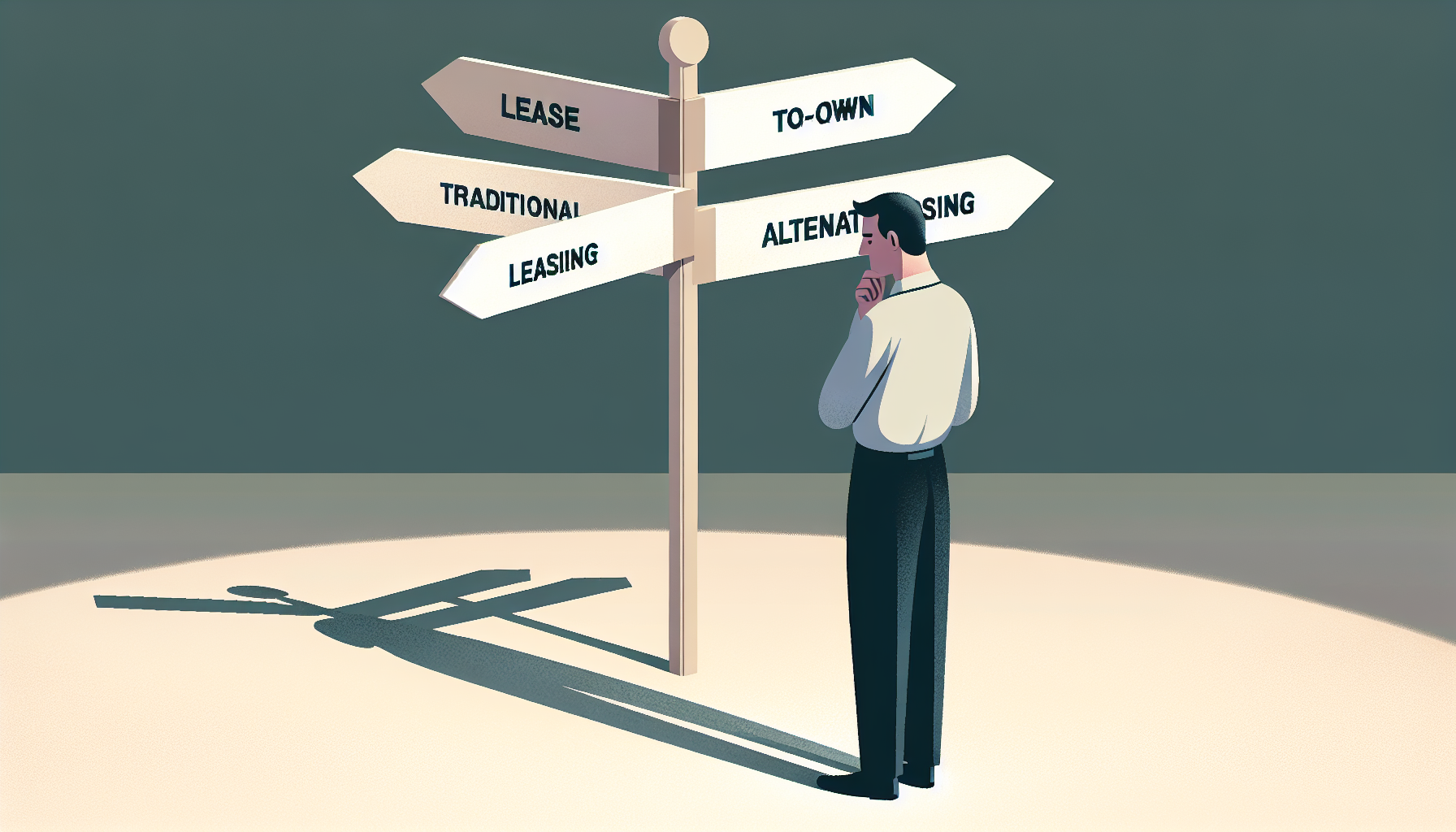
Navigating car financing requires making informed decisions to safeguard your financial health. Whether considering lease-to-own, traditional leasing, or alternative options like second-chance loans, understanding the terms and potential costs is crucial.
- Evaluate all available options: Compare payments, total costs, and contract terms.
- Understand the long-term impact: Consider how each option affects your credit score and future financial stability.
- Seek professional advice: Consult with financial advisors or legal professionals to ensure you choose the best path for your situation.
Making well-informed choices helps secure your financial future while meeting your transportation needs.
By carefully weighing these factors, you can make a decision that balances immediate affordability with long-term financial health. This thoughtful approach ensures that your car financing choice not only meets your current transportation needs but also supports your overall financial goals.
If you are struggling to keep up with your debts and considering filing bankruptcy, don’t delay any longer. Contact the Law Office of Richard Kistnen by calling (718) 738-2324 or clicking here to book your complimentary, no-obligation virtual bankruptcy consultation.